
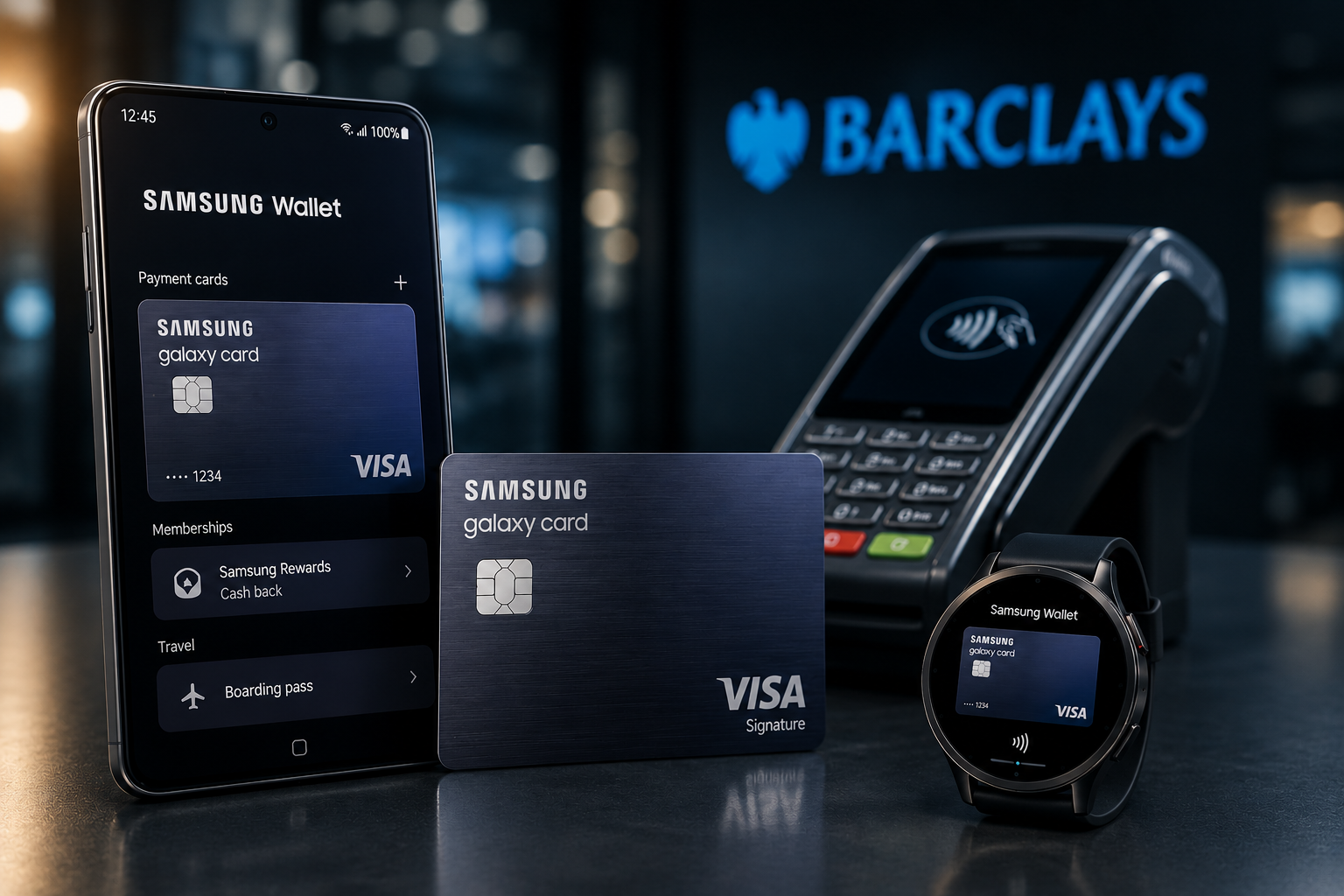
Samsung has officially entered the United States credit card market through the launch of the Samsung Galaxy Card, marking a significant expansion of its financial services ambitions beyond smartphones, wearables, and connected devices. Developed in partnership with Barclays US Consumer Bank and operating on Visa’s global network, the new product places financial services at the center of Samsung’s broader ecosystem strategy while intensifying competition among major technology companies seeking to own the customer relationship beyond hardware purchases.
The launch reflects a broader transformation taking place across the technology sector. Rather than viewing digital wallets as standalone payment tools, companies are increasingly integrating lending, rewards, financing, and personal financial management into unified consumer ecosystems. For Samsung, the Galaxy Card represents another step toward making Samsung Wallet a central destination for everyday financial activity rather than simply a place to store payment credentials.
Expanding Beyond Devices
The Samsung Galaxy Card is the company’s first co-branded credit card in the United States and has been designed to work seamlessly with Samsung Wallet. Consumers can choose between a virtual card that is instantly available within the wallet application or a premium physical metal card, allowing purchases to be managed digitally while maintaining access to a traditional payment card when required. Transactions are protected through Samsung Knox, the company’s device security platform, reinforcing Samsung’s emphasis on integrating hardware security with financial services.
The rewards structure is designed to strengthen customer engagement throughout Samsung’s product ecosystem. Cardholders receive elevated cash rewards for purchases made directly through Samsung, additional rewards when using Samsung Wallet, and standard cashback across everyday spending categories. New eligible customers are also offered a welcome incentive after meeting minimum spending requirements during the introductory period.
Embedded Finance Continues to Reshape Consumer Banking
Samsung’s move underscores the growing importance of embedded finance, a model that integrates financial products directly into digital platforms consumers already use daily. Rather than encouraging customers to adopt entirely new banking relationships, companies are embedding financial capabilities into existing digital ecosystems, creating a more seamless experience while strengthening customer loyalty.
This strategy has become increasingly attractive for global technology companies because it generates recurring engagement well beyond hardware replacement cycles. Every purchase made through a proprietary financial product creates another touchpoint between the consumer and the broader ecosystem, increasing both retention and long-term customer value.
For Barclays, the partnership represents another opportunity to expand its co-branded credit card portfolio within the United States. The bank has continued investing in partnerships that combine established financial infrastructure with globally recognized consumer brands, enabling technology companies to enter financial services without becoming full-scale banking institutions themselves.
Competition Is Shifting Toward Ecosystems
The introduction of Samsung Galaxy Card also illustrates how competition in consumer finance is evolving. Technology companies are no longer competing solely through device specifications or software capabilities. Instead, they are building interconnected ecosystems where hardware, digital wallets, financial products, subscriptions, and rewards programs reinforce one another.
Several key trends are driving this evolution:
- Greater integration between mobile wallets and consumer credit products.
- Increased demand for personalized rewards tied to digital ecosystems.
- Growing consumer preference for managing financial services through mobile applications.
- Expansion of embedded finance partnerships between banks and technology companies.
- Stronger emphasis on secure, device-based authentication and digital identity.
As digital wallets continue gaining adoption worldwide, financial products that operate seamlessly within those ecosystems are becoming an increasingly important competitive differentiator.
A Broader Vision for Consumer Finance
Samsung’s entry into the US credit card market signals more than the introduction of another rewards card. It demonstrates how major technology companies increasingly view financial services as an essential component of their long-term platform strategy. By integrating payments, financing, rewards, and account management directly into Samsung Wallet, the company is extending its relationship with consumers well beyond device ownership.
As the boundaries between technology platforms and financial services continue to narrow, partnerships between global manufacturers and established financial institutions are likely to become more common. The Samsung Galaxy Card represents another milestone in that transition, highlighting how embedded finance is steadily reshaping consumer expectations while reinforcing the role that digital ecosystems will play in the future of retail financial services.